Glass doors have long become a standard in modern saunas. They make the space brighter, look aesthetically pleasing, and perfectly complement wooden interiors. However, many people still wonder: can the glass break in a sauna due to high temperatures or sudden temperature changes?
Why Tempered Glass Is Used for Sauna Doors
The temperature in a sauna can reach 80–110°C, and sometimes even higher. Ordinary glass is not designed for such conditions — it can crack.
That is why sauna doors are made of tempered glass.
This type of glass undergoes a special thermal treatment that makes it:
-
4–5 times stronger than regular glass
-
resistant to temperature changes
-
capable of withstanding mechanical loads
-
safe in case of breakage
Thanks to these properties, tempered glass sauna doors are widely used in both private saunas and commercial SPA complexes.
How Tempered Glass Is Made
The tempering process consists of two main stages:
1. Heating the glass
The glass sheet is heated to approximately 620°C.
2. Rapid cooling
After heating, the glass is quickly cooled using powerful air streams.
As a result, compressive stress forms inside the material, which significantly increases the glass strength.
This is why tempered glass can withstand high temperatures and sudden temperature changes.
Can Tempered Glass Break from Temperature Changes?
Under normal conditions, glass sauna doors do not break due to temperature differences.
After tempering, glass can withstand temperature changes of approximately 150–200°C.
For comparison:
-
sauna temperature — 80–100°C
-
temperature difference between sauna and dressing room — 30–70°C
Therefore, the safety margin of tempered glass significantly exceeds real operating conditions.
In most cases, cracks appear not because of temperature but due to:
-
a strong impact on the edge of the glass
-
improper installation
-
mechanical damage.
Types of Tempered Glass for Sauna Doors
Sauna glass doors may differ not only in size but also in the type of glass used.
Clear Glass
The most universal option.
Advantages:
-
allows maximum light transmission
-
visually enlarges the space
-
fits perfectly into modern interiors
These doors are often installed in smaller saunas.
Tinted Glass
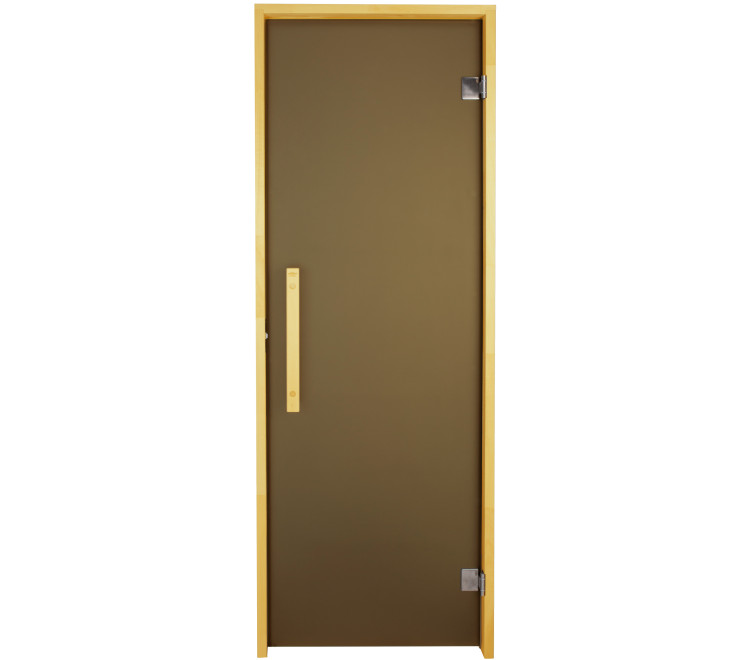
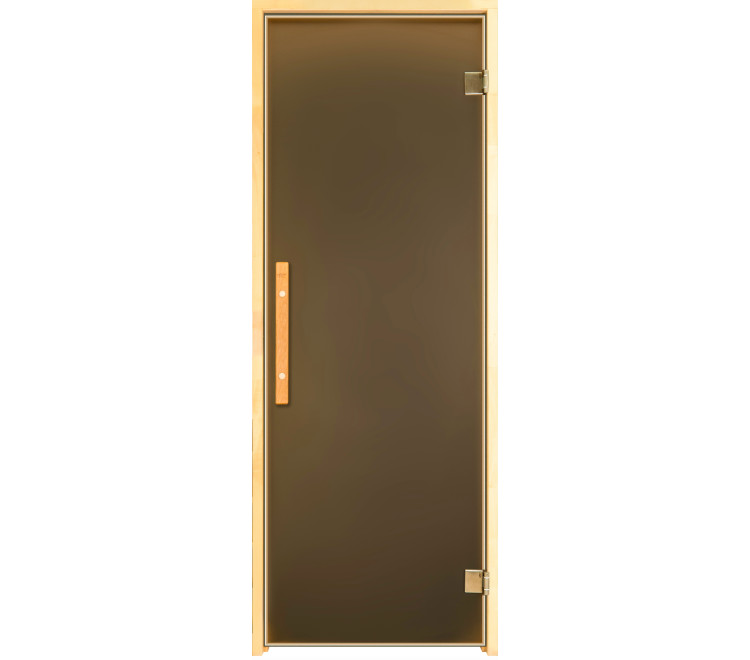
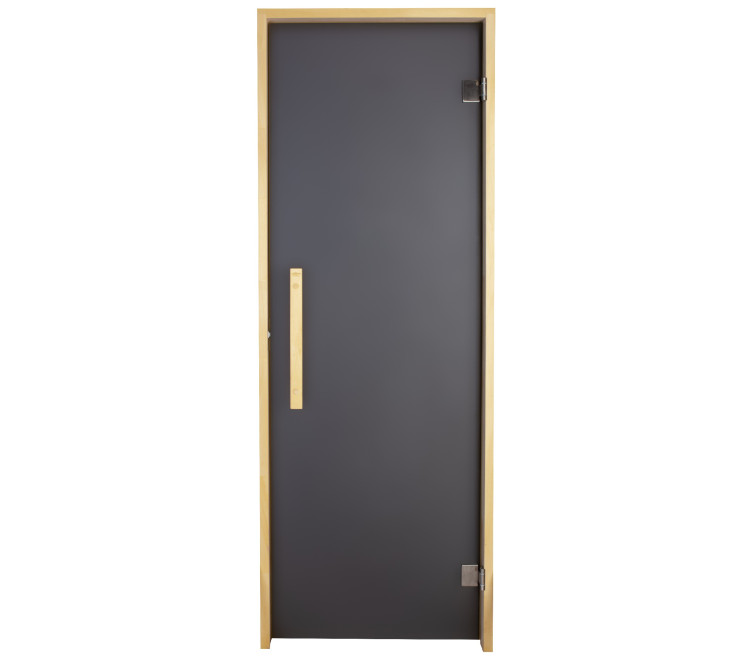
Has a light bronze or graphite shade.
Advantages:
-
looks more premium
-
adds depth to the interior
-
better hides water marks
This option is popular in SPA centers and designer saunas.
Frosted (Satin) Glass
The surface of this glass is treated to become semi-transparent.
Advantages:
-
provides more privacy
-
softly diffuses light
-
creates a refined and restrained aesthetic.
Design of Glass Sauna Doors
Modern glass sauna doors are not only functional but also an important design element.
The overall appearance depends on several components:
-
type of glass
-
wooden frame
-
fittings
-
handles and hinges
Doors can be installed in a wooden frame or an aluminum frame (often used for hammams where humidity is higher).
Hardware for Glass Sauna Doors
Door fittings play an important role in both functionality and design.
Hinges
Sauna doors use special metal hinges designed to withstand high temperatures and humidity.
They ensure:
-
smooth door movement
-
structural stability
-
durability.
Handles
Handles are usually made of:
-
wood
-
stainless steel
-
a combination of wood and metal.
Wooden handles do not heat up and are comfortable to use, which is why they are usually installed on the sauna side.
Magnetic or Roller Latches
These mechanisms ensure tight door closing, helping to retain heat inside the sauna.
Glass or Wooden Doors: Which Is Better for a Sauna?
Besides glass, sauna doors are also made of wood. Each material has its own characteristics.
| Feature | Glass Doors | Wooden Doors |
|---|---|---|
| Light | Let light through | Fully closed |
| Design | Modern | Classic |
| Moisture resistance | High | Depends on treatment |
| Durability | Very high | High with proper care |
| Thermal insulation | Slightly lower | Very high |
| Cost | Medium or high | Medium (depends on wood type) |
The final choice usually depends on the sauna style and personal preferences.
Sauna Design Trends
Modern saunas are increasingly designed in minimalist or Scandinavian styles.
Main trends include:
-
combination of wood and glass
-
large glass partitions
-
natural wood tones
-
soft LED lighting.
In such interiors, glass sauna doors play an important role — they make the space lighter, more open, and more modern.
Conclusion
The myth that sauna glass doors can break due to temperature differences has no real basis.
Tempered glass used in sauna doors:
-
is several times stronger than regular glass
-
withstands significant temperature fluctuations
-
remains safe even in case of breakage.
Glass doors are not only practical but also help create a modern, bright, and stylish sauna interior, which is why their popularity continues to grow every year.